LIVEOpen Daily 7:00 AM – 8:00 PM across Hyderabad & Rangareddy
No Bleaching · 0 Water Wastage · Verified ATP Report +91 9676234561

OUR 6-STAGE SCIENTIFIC WATER TANK CLEANING PROCESS

Our 6-Stage Scientific Water Tank Cleaning Process in Hyderabad

Clean Water Starts with a Properly Cleaned Tank. Doctor Tank Cleaners follows a structured six-stage water tank cleaning process for homes, apartments, gated communities, commercial buildings and industrial facilities across Hyderabad. Our process includes dewatering, high-pressure jet spraying, sludge removal, ozone + silver-ion based disinfectant treatment, UV radiation and final hygiene reporting with ATP, ADP and AMP parameters where supported by the testing method.

Ozone + Silver-Ion Based Disinfectant Before & After ATP Report Open Daily 7 AM – 8 PM

We combine suitable cleaning equipment, a step-by-step cleaning procedure and documented hygiene readings to help customers understand the work carried out inside their water storage tanks.

WHY STRUCTURE MATTERS

Why a Structured Water Tank Cleaning Process Matters

Water storage tanks can collect sediment, sludge, dirt, algae and other deposits over time. The condition of a tank depends on its location, water source, usage, construction and maintenance schedule. Cleaning should therefore involve more than removing visible dirt from the tank floor. A systematic procedure addresses stored water, internal surfaces, accumulated deposits and the final hygiene-checking stage.

Doctor Tank Cleaners uses a six-stage process designed to address these cleaning requirements in an organised sequence. Each stage prepares the tank for the next activity and contributes to a more complete cleaning workflow.

OVERVIEW

Our Six Stages at a Glance

STAGE 01

Stage 1 – Dewatering

Complete water removal to prepare the tank for cleaning

STAGE 02

Stage 2 – High-Pressure Jet Spraying

Wash internal walls, ceilings, corners and accessible surfaces

STAGE 03

Stage 3 – Sludge Removal

Extract loosened sludge, sediment and dirty washwater

STAGE 04

Stage 4 – Ozone + Silver-Ion Based Disinfectant

Apply an appropriate treatment to internal tank surfaces

STAGE 05

Stage 5 – UV Radiation

Use UV-C treatment as an additional hygiene-control stage

STAGE 06

Stage 6 – ATP, ADP & AMP Reports

Record hygiene readings and provide digital documentation

STEP-BY-STEP WORKFLOW

Detailed Six-Stage Cleaning Process

Explore each phase of our mechanized, scientific tank cleaning procedure in Hyderabad.

STAGE 01

Stage 1: Dewatering

Complete water removal to prepare the tank for cleaning

The first stage is dewatering. Stored water is removed from the tank using suitable dewatering equipment, such as heavy-duty submersible pumps. Lowering the water level and emptying the tank allows the cleaning team to access the internal floor and identify accumulated sludge, sediment and debris.

  • Remove stored water from the tank before internal cleaning.
  • Expose accumulated bottom sludge, sediment and loose debris.
  • Prepare the tank floor, walls and accessible internal areas for the next cleaning stage.
  • Assess the tank's condition and access requirements before proceeding.
Why this stage matters:Dewatering creates access to surfaces and deposits that cannot be properly addressed while the tank remains full.
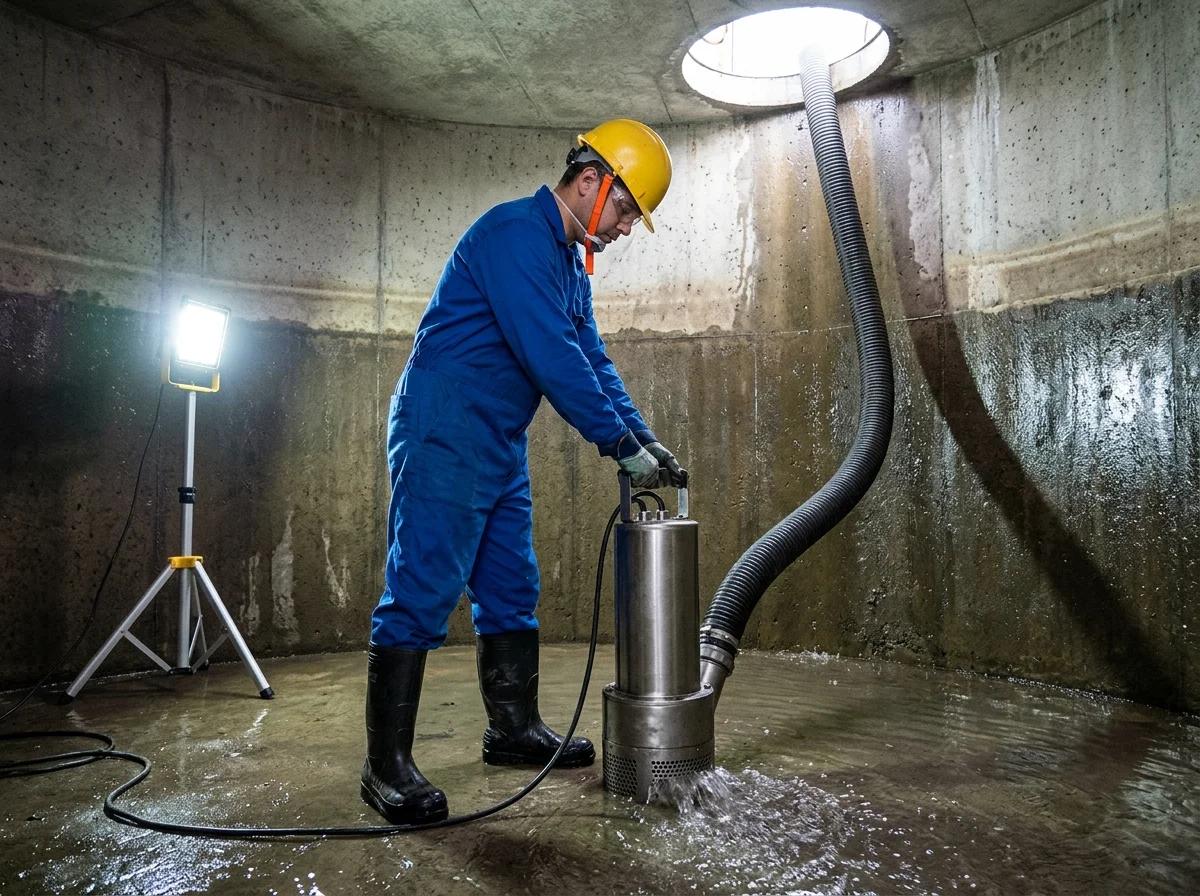
Water tank dewatering using a submersible pump
STAGE 02

Stage 2: High-Pressure Jet Spraying

Wash internal walls, ceilings, corners and accessible surfaces

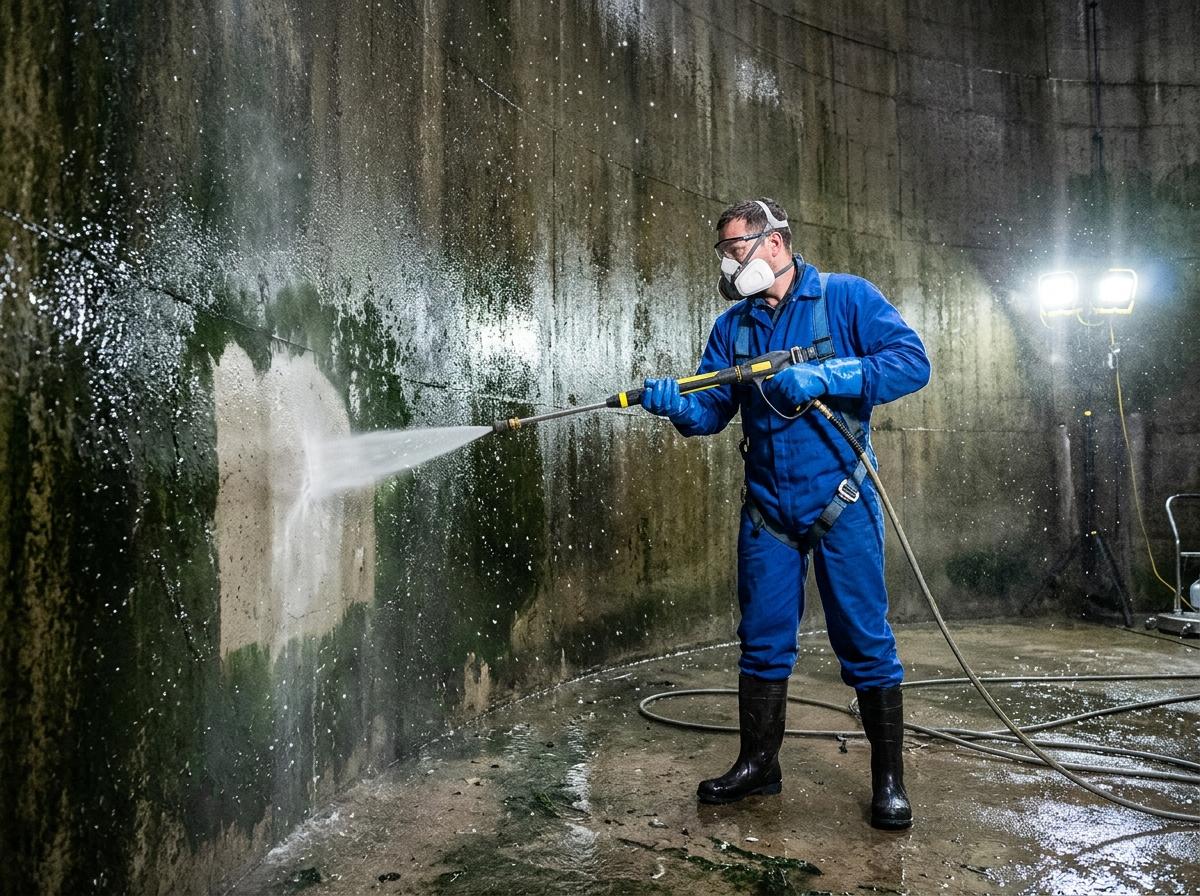
After dewatering, high-pressure water jet spraying is used to loosen and wash away stubborn dirt, biofilm, algae and accumulated deposits from the tank's accessible internal surfaces. The water jet helps dislodge material adhering to the walls, ceiling, floor and corners so it can be removed during the sludge extraction stage.

  • Spray internal tank walls and accessible ceiling areas.
  • Direct cleaning towards corners, joints and other areas where deposits may collect.
  • Loosen adhered dirt, algae and surface deposits.
  • Prepare dislodged material for collection and extraction.
Why this stage matters:High-pressure spraying helps dislodge deposits from internal surfaces and supports more effective removal in the following stage.
High-pressure jet spraying inside a water storage tank
STAGE 03

Stage 3: Sludge Removal

Extract loosened sludge, sediment and dirty washwater

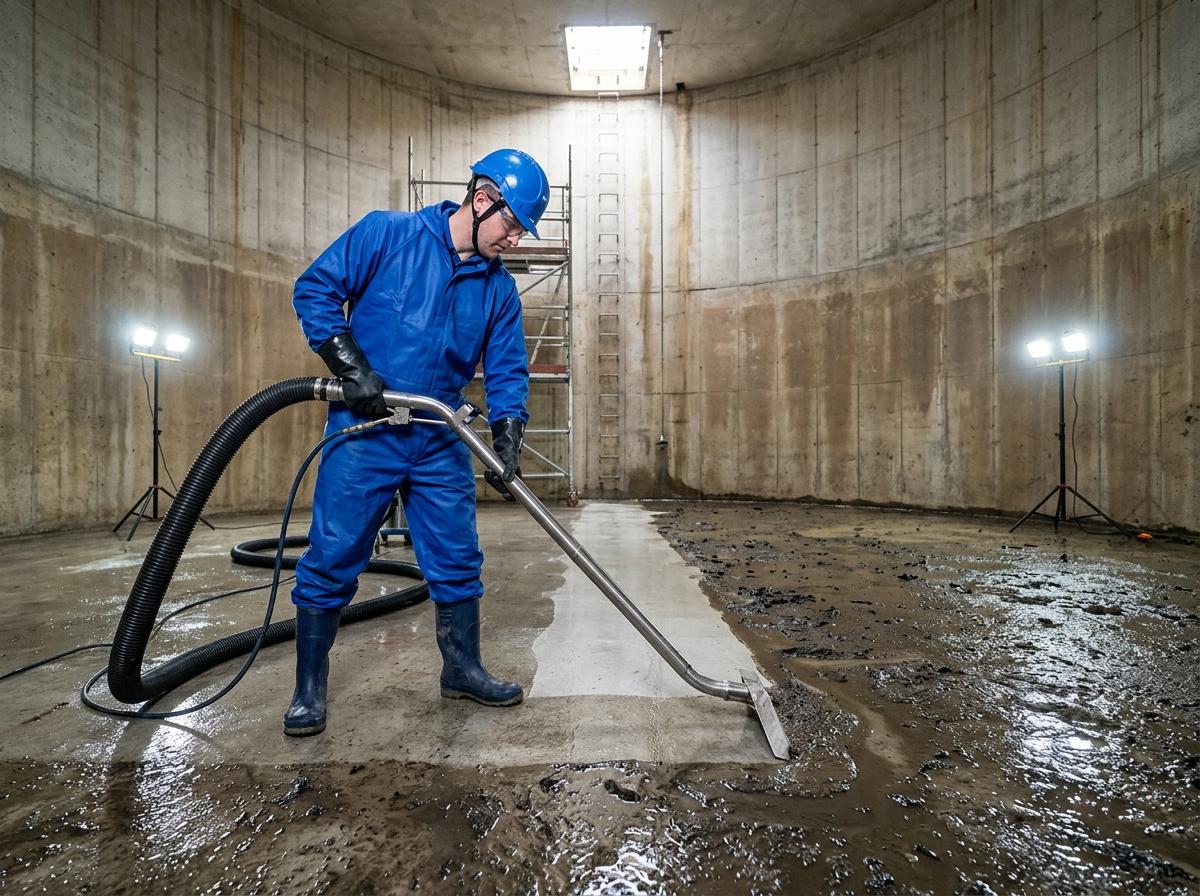
Once deposits have been loosened, the next stage is to remove the resulting sludge and dirty washwater. Suitable sludge-removal equipment are used to collect loosened dirt particles, sediment and residues from the tank.

  • Extract accumulated and loosened sludge from the tank floor.
  • Remove dirty washwater and suspended debris.
  • Collect sediment and loose residues left after jet spraying.
  • Clear the cleaned areas so the treatment stages can follow.
Why this stage matters:Removing loosened sludge and dirty washwater helps prevent extracted material from remaining inside the tank after washing.
Sludge and sediment removal from a water tank
STAGE 04

Stage 4: Ozone + Silver-Ion Based Disinfectant

Apply an appropriate treatment to internal tank surfaces

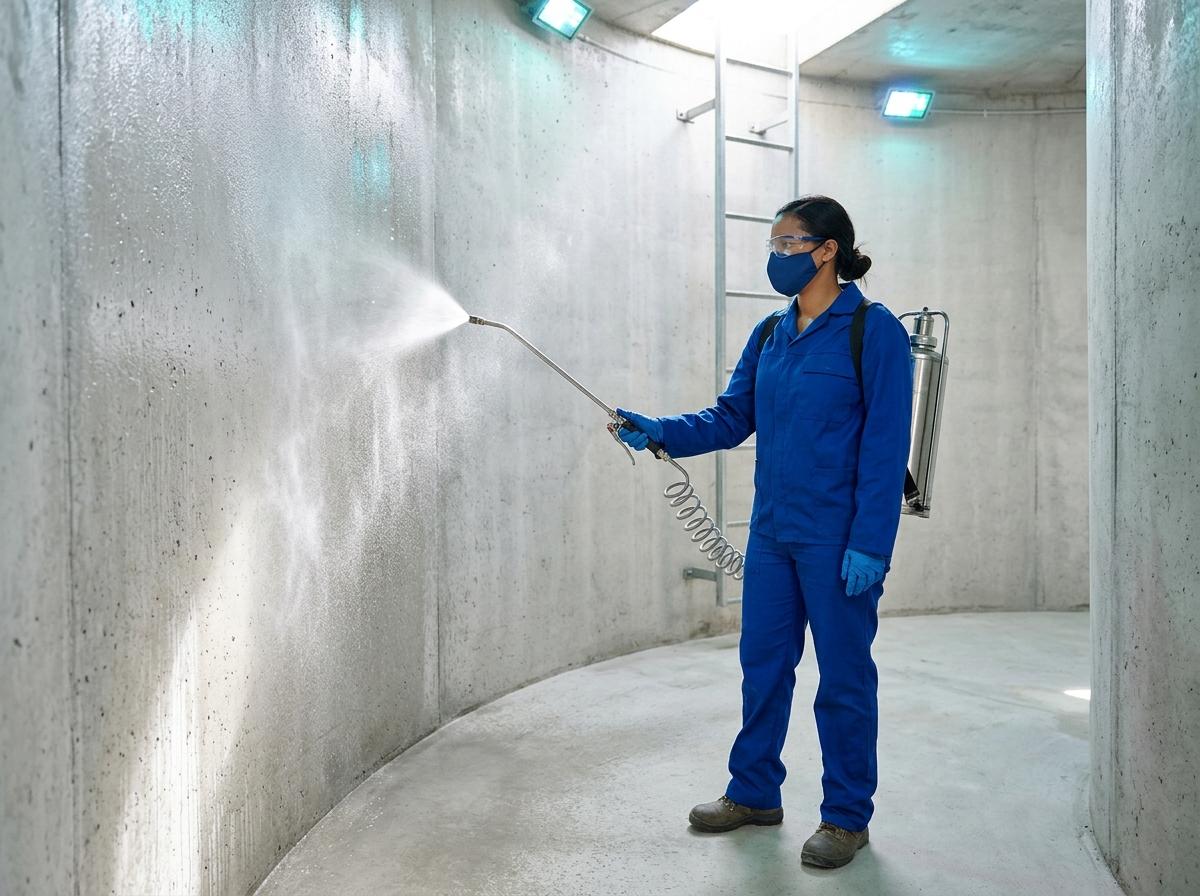
Following physical cleaning and sludge extraction, an ozone-based, eco-friendly disinfectant with silver-ion technology is applied to the tank's accessible internal surfaces according to the product's application instructions. The treatment is followed by a clean water rinse. The disinfectant is selected for tank-cleaning use and applied in accordance with the manufacturer's directions.

We use an ozone-based, eco-friendly disinfectant that breaks down safely, followed by a clean water rinse. Safe for your family, safe for your tank.
  • Apply the selected treatment to accessible internal surfaces.
  • Cover relevant walls, corners and other specified areas.
  • Follow the product manufacturer's directions for dilution and contact time.
  • Observe applicable safety, handling and rinsing instructions before the tank is returned to use.
Why this stage matters:This stage provides an additional surface-treatment step after physical dirt and sludge have been removed.
Ozone + silver-ion based disinfectant treatment on internal water tank surfaces
STAGE 05

Stage 5: UV Radiation

Use UV-C treatment as an additional hygiene-control stage

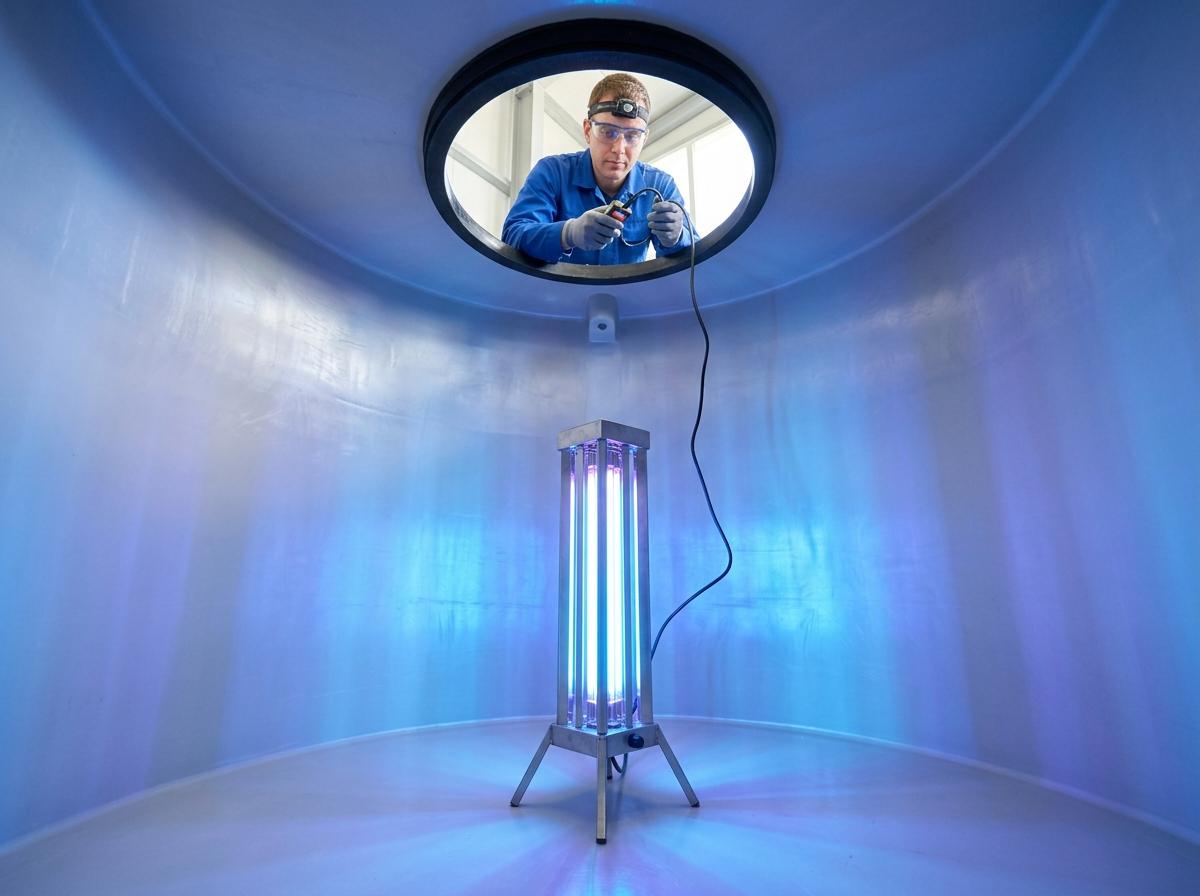
The fifth stage uses suitable UV-C equipment as an additional treatment step in the cleaning process. The equipment is operated according to its specifications and the applicable exposure procedure. UV-C performance depends on factors such as equipment output, exposure time, distance, shadowing and the accessibility of the surface being treated.

  • Use suitable UV-C equipment for the intended application.
  • Follow the equipment manufacturer's operating and exposure instructions.
  • Apply the treatment in accordance with the site procedure and safety requirements.
  • Use UV-C as an additional stage alongside, not as a replacement for, physical cleaning.
Why this stage matters:UV-C can inactivate susceptible microorganisms when appropriate exposure conditions are achieved. It complements, rather than replaces, physical cleaning and other required controls.
UV-C radiation treatment stage for water tank hygiene
STAGE 06

Stage 6: ATP, ADP & AMP Reports

Record hygiene readings and provide digital documentation

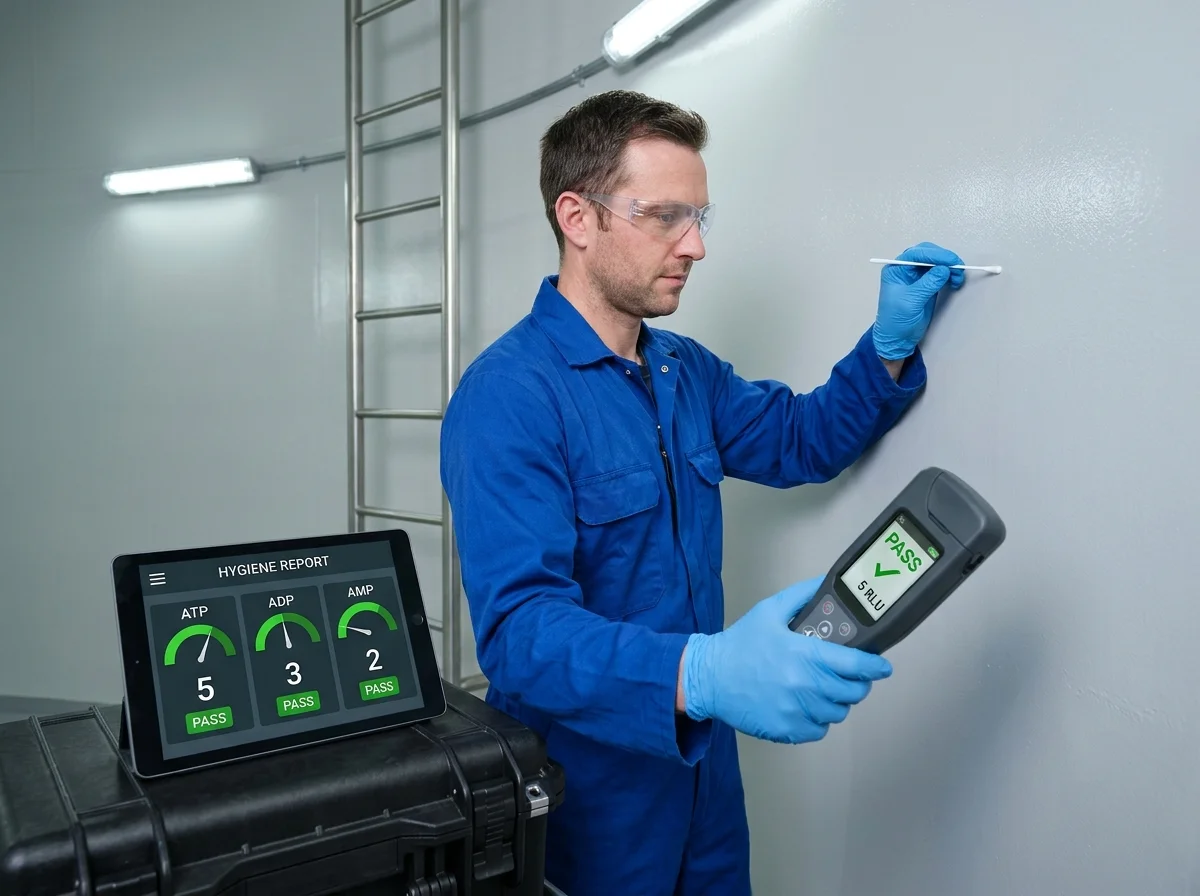
The final stage is hygiene reporting. Surface swab samples are collected from selected areas of the tank and assessed using a compatible hygiene-monitoring method. The available readings are recorded and presented in a report. ATP, ADP and AMP parameters are included where supported by the testing method and equipment being used.

  • Collect surface swab samples from selected tank areas.
  • Record available ATP, ADP and AMP readings supported by the testing method.
  • Provide before-and-after comparisons when readings are collected at both stages.
  • Prepare a digital hygiene report or certificate based on the recorded results and applicable criteria.
  • Share the report with the customer as documentation of the hygiene-checking stage.
Why this stage matters:Documented readings add transparency by showing the results of the specified surface checks. They are not a substitute for laboratory drinking-water quality testing.
ATP ADP AMP surface hygiene readings and digital report
DOCUMENTED TRANSPARENCY

What Is Included in the Hygiene Report?

The digital report is intended to document the hygiene-monitoring activity carried out as part of the service. Depending on the testing method and the agreed scope, the report may include the sampled areas, available readings, before-and-after comparison and the applicable result interpretation.

  • Details of the hygiene checks performed.
  • Available ATP, ADP and AMP parameters, where supported.
  • Before-and-after readings where both sets of samples are taken.
  • A record of the result against the applicable acceptance criteria.
  • Digital documentation for the customer's reference and audits.
Important:Surface hygiene readings assess the sampled surfaces and the specific indicators measured. They do not independently establish that stored water is potable or free from every pathogen. Drinking-water safety should be assessed through appropriate water sampling and laboratory testing.
SECTORS WE SERVE

Who Can Benefit from Our Six-Stage Process?

Residential Properties

Homeowners looking for overhead water tank cleaning and underground sump cleaning.

Apartments & Gated Communities

Apartment associations and facility managers responsible for common water storage tanks and sumps.

Commercial Buildings

Offices, hotels, educational institutions, restaurants and other commercial premises.

Industrial Facilities

Factories, warehouses and industrial sites that require planned cleaning of water storage tanks.

OUR ADVANTAGE

Why Choose Doctor Tank Cleaners?

A clearly defined six-stage cleaning workflow.
Dewatering and high-pressure jet spraying using suitable equipment.
Sludge and dirty washwater extraction.
Ozone + silver-ion based disinfectant treatment, followed by a clean water rinse.
UV-C treatment according to equipment and procedure requirements.
Hygiene readings and digital reporting, with ATP, ADP and AMP parameters where supported.
Services for residential, apartment, commercial and industrial water storage tanks.
Service coverage across Hyderabad, subject to location and site assessment.
SERVICE COVERAGE

Water Tank Cleaning Services Across Hyderabad

Doctor Tank Cleaners provides water tank cleaning services across Hyderabad and nearby areas. Customers can enquire about service availability in localities including:

KukatpallyMiyapurChandanagarMadinagudaNizampetBachupallyKondapurGachibowliFinancial DistrictNanakramgudaMadhapurHITEC CityJubilee HillsBanjara HillsAmeerpetSR NagarBegumpetSecunderabadBowenpallyKompallyAlwalMalkajgiriUppalLB NagarVanasthalipuramHayathnagarDilsukhnagarKothapetNagoleManikondaTellapurPatancheruShamshabad

Service availability, scheduling and pricing may depend on the exact location, tank size, access, condition and scope of work. Contact our team to confirm availability for your property.

FAQS

Frequently Asked Questions

What are the six stages of water tank cleaning?

The six stages are dewatering, high-pressure jet spraying, sludge removal, ozone + silver-ion based disinfectant treatment, UV radiation and ATP, ADP and AMP reporting where supported by the testing method.

Why is dewatering done before tank cleaning?

Dewatering removes stored water so the cleaning team can access the tank floor and internal surfaces and remove accumulated sludge and debris.

What does high-pressure jet spraying do?

It helps loosen dirt, algae, biofilm and other deposits from accessible internal tank surfaces so they can be removed during extraction.

How is sludge removed from a water tank?

Loosened sludge, sediment and dirty washwater are collected using suitable sludge-removal equipment and an industrial wet vacuum system.

Why is an ozone + silver-ion based disinfectant used?

An ozone-based, eco-friendly disinfectant with silver-ion technology is applied after physical cleaning as an additional hygiene step, followed by a clean water rinse. It is used according to the manufacturer's instructions.

What is the purpose of UV radiation in tank cleaning?

UV-C is used as an additional treatment stage. Its effectiveness depends on the equipment, exposure conditions and accessibility of the surfaces.

What are ATP, ADP and AMP reports?

They are hygiene-monitoring parameters that may be included in the report when supported by the testing method. The report records readings from selected surface samples.

Does a surface hygiene report confirm drinking-water quality?

No. Surface hygiene readings do not replace laboratory testing of stored water. Appropriate water sampling and laboratory analysis are needed to assess drinking-water quality.

Do you clean apartment and industrial water tanks?

Yes. Doctor Tank Cleaners offers services for residential properties, apartments, gated communities, commercial buildings and industrial facilities, subject to site assessment.

Which areas in Hyderabad do you serve?

We serve locations across Hyderabad and nearby areas. Contact us with your locality and tank details to confirm service availability.

BOOK PROFESSIONAL WATER TANK CLEANING IN HYDERABAD

Clean Water. Healthy Life.

Choose Doctor Tank Cleaners for a structured six-stage cleaning process supported by hygiene reporting. Contact our team to discuss your property, tank capacity and cleaning requirements.

www.doctortankcleaning.in·+91 96762 34561·DOCTOR TANK CLEANERS – Clean Water. Healthy Life.
Call Now WhatsApp Book